


.webp)
.webp?width=300&height=200&name=make-an-appointment%20(1).webp)
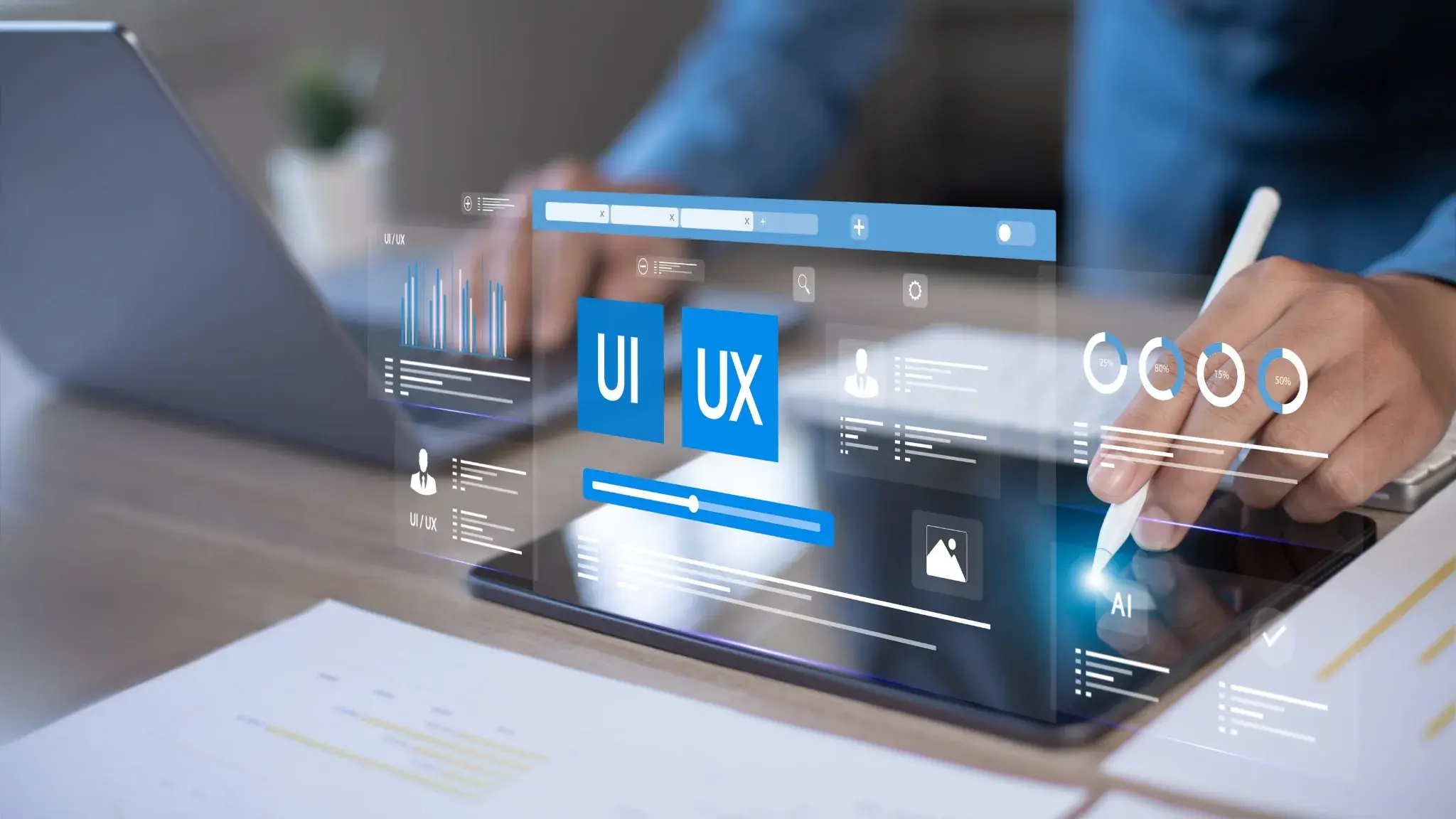




Hiring UI UX designers has shifted from a design decision to a business-critical one. In 2026, product success depends less on feature volume and more on clarity, usability, and decision-driven design. Companies that hire UI UX designers well build products that convert, retain, and scale.
Companies that get it wrong ship interfaces that look polished but quietly fail users.
Latin America has emerged as one of the most reliable regions to hire UI UX designers who understand modern product environments. Designers in the region increasingly work on global products, collaborate with distributed teams, and operate inside mature design systems rather than isolated creative roles.
This guide is built from hands-on experience hiring and integrating UI UX designers across SaaS, fintech, health tech, eCommerce, and enterprise platforms. It is not a surface-level overview. If you are planning to hire UI UX designers in 2026, this guide will help you make decisions grounded in outcomes rather than aesthetics.
Looking for data engineers ready to join your team? Explore our Staff Augmentation Services today.
What does a UI UX designer actually do
A UI UX designer is responsible for shaping how users interact with a product from first contact to long-term usage. This role combines research, structure, interaction, and visual clarity into a single discipline focused on usability and outcomes.
UI UX designers begin by understanding users. This includes interviewing users, reviewing behavioral data, mapping user journeys, and identifying friction points. The goal is not to collect opinions but to uncover patterns that inform design decisions.
Once user needs are understood, UI UX designers translate insights into structure. They define information architecture, user flows, and interaction logic. This is where many products either become intuitive or frustrating. Good designers reduce cognitive load and guide users toward clear actions.
From there, UI UX designers create wireframes and prototypes that test ideas quickly. Prototypes are used to validate assumptions before development begins. This step saves time and cost by identifying issues early rather than fixing them in production.
UI design then brings clarity and consistency to the interface. This includes layout, typography, spacing, color usage, and component behavior. Strong UI design supports usability rather than competing with it.
UI UX designer vs. product designer vs. visual designer
One of the most common hiring mistakes is misunderstanding role boundaries. Titles vary across companies, but responsibilities matter more than labels.
UI UX designers typically cover both user experience and interface design. They are responsible for research, flows, interaction design, and visual execution. In smaller teams, they often overlap with product designers.
Product designers usually operate with broader ownership. They work closely with product managers, influence roadmap decisions, and align user needs with business goals. In many organizations, product designers are senior UI UX designers with expanded scope.
Visual designers focus primarily on aesthetics. They specialize in branding, marketing visuals, and visual systems. While visual design is important, it does not replace UX thinking.
When companies hire UI UX designers but expect only visual output, frustration follows on both sides. Likewise, hiring a visual designer to solve usability problems rarely works.
Clarity at this stage is critical. Before you hire UI UX designers, you need to understand whether you need research leadership, execution inside an existing design system, or strategic product design support.
What are the responsibilities of a UI UX designer?
A UI UX designer is responsible for turning user needs and business goals into clear, usable product experiences. Their focus is on reducing friction, improving usability, and guiding users through the product with intention.
Key responsibilities include:
- Researching user behavior through interviews, usability tests, and data analysis
- Defining user flows, information architecture, and interaction logic
- Designing wireframes, prototypes, and final UI screens
- Ensuring visual clarity, hierarchy, and consistency across the product
- Maintaining and contributing to design systems and reusable components
- Collaborating with product managers to align design with product goals
- Working closely with developers to support accurate implementation
- Reviewing builds and refining designs before release
- Applying accessibility and inclusive design standards
- Measuring outcomes and iterating based on real user feedback
At their best, UI UX designers help teams make better product decisions. They prevent usability issues early, improve adoption, and ensure the product works for users in real-world conditions.
How responsibilities change by company stage
The same UI UX designer will operate very differently depending on where your company is in its lifecycle.
In early-stage startups, UI UX designers often work with limited data and tight timelines. Their responsibility is to validate ideas quickly, simplify complex concepts, and help founders move from assumptions to tested flows. Designers here need to be comfortable with ambiguity and rapid iteration.
In scaling companies, responsibilities shift toward consistency and efficiency. UI UX designers focus on improving onboarding, reducing friction in core flows, and building or maintaining design systems. They collaborate closely with multiple squads and ensure that new features do not degrade the overall experience.
In enterprise environments, UI UX designers manage complexity. They navigate legacy systems, compliance constraints, and multiple stakeholder groups. Responsibilities include aligning design decisions across teams, documenting patterns, and ensuring accessibility and usability standards are met.
Understanding this context matters because hiring UI UX designers without matching their experience to your company's stage often leads to misalignment.
What experience level should you expect?
Seniority in UI UX design is not about years alone. It is about scope, ownership, and decision-making confidence.
Junior UI UX designer (1–3 years)
Junior UI UX designers typically support defined tasks. They work on wireframes, update UI components, and assist with usability testing. They rely on guidance from senior designers and perform best in structured environments with established design systems.
Mid-level UI UX designer (3–6 years)
Mid-level UI UX designers own features or complete user flows. They can conduct research, synthesize insights, and deliver end-to-end design solutions. They communicate trade-offs clearly, collaborate closely with engineers, and refine designs based on feedback. They are often the execution backbone of design teams.
Senior UI UX designer (6+ years)
Senior UI UX designers own outcomes. They influence product strategy, define research direction, and mentor other designers. They identify risks early, align stakeholders, and ensure design decisions support business goals. Seniors think in systems and long-term impact rather than individual screens.
Lead or principal designers operate at a higher level. They shape design culture, guide multiple teams, and connect user experience strategy with company objectives.
Why seniority mismatches cause most hiring failures
The most common failure pattern is expecting mid-level designers to operate as seniors. They deliver screens but struggle to push back on unclear requirements, missing data, or conflicting stakeholder input.
Another failure comes from hiring seniors but limiting them to execution. When designers are not allowed to influence research or strategy, they disengage and deliver below their capabilities.
A clear role definition solves most of these issues. Before you hire UI UX designers, define what decisions they are expected to own and where collaboration boundaries sit.
Companies that do this well integrate designers faster, reduce friction, and see measurable improvements in user experience within months.
How UI UX designers operate inside real product teams
In modern product teams, UI UX designers do not work in isolation. They are embedded in cross-functional workflows that include product management, engineering, and data.
Designers participate in discovery sessions to define problems before solutions are proposed. They collaborate during sprint planning to ensure design work aligns with development timelines. They review builds to ensure design intent survives implementation.
Strong UI UX designers adapt their output to team maturity. In early-stage products, they focus on validating assumptions quickly. In scaling products, they prioritize consistency, accessibility, and design systems. In enterprise environments, they navigate complexity, stakeholder alignment, and compliance constraints.
This adaptability is one of the strongest signals of senior UI UX talent.
It is also why hiring UI UX designers through staff augmentation works well when done correctly. Designers integrate into your existing workflows rather than forcing new ones, provided they have experience working in similar environments.
What skills does a top UI UX designer have?
Hiring UI UX designers requires evaluating far more than visual taste or tool familiarity. Strong designers combine research capability, interaction design, and collaboration skills to create products that are usable, scalable, and aligned with business goals.
Core UI UX skills (must-haves)
Every UI UX designer needs a solid foundation in user-centered design and product thinking. These skills determine whether a product feels intuitive, consistent, and easy to use.
- Ability to conduct user research through interviews, usability testing, and behavioral analysis
- Strong understanding of user flows, information architecture, and interaction design
- Experience designing wireframes, prototypes, and high-fidelity interfaces
- Proficiency with modern design tools such as Figma
- Knowledge of responsive design and cross-device usability
- Ability to apply visual hierarchy, spacing, typography, and layout for clarity
- Experience working within or contributing to design systems
- Familiarity with accessibility standards and inclusive design principles
With these core skills, UI UX designers can design interfaces that reduce friction and guide users effectively through the product.
Advanced and nice-to-have skills
Senior UI UX designers differentiate themselves by understanding how design decisions scale across products and teams. These skills support long-term usability and product growth.
- Experience in planning and leading user research initiatives
- Ability to define and evolve design systems across multiple teams
- Strong understanding of accessibility compliance and usability standards
- Experience collaborating on complex products with multiple user roles
- Familiarity with product analytics and design impact measurement
- Ability to lead design workshops and cross-functional discovery sessions
- Experience mentoring junior designers or guiding design direction
These capabilities help organizations move from isolated design execution toward mature, scalable product experiences.
Soft skills (equally important)
UI UX designers operate at the intersection of users, product, and engineering. Soft skills directly influence how effective their work becomes.
- Clear communication with product managers, developers, and stakeholders
- Ability to explain design decisions and trade-offs logically
- Strong problem-solving mindset grounded in user needs
- Openness to feedback and iteration
- Adaptability as product priorities and constraints change
- Collaborative approach to working inside cross-functional teams
UI UX designers with strong soft skills align teams faster, reduce friction during delivery, and help products evolve with clarity and confidence.
How to interview UI UX designers without wasting time
Interviewing UI UX designers often fails because companies evaluate the wrong signals. Too much focus is placed on visuals and tools, while reasoning, ownership, and collaboration get overlooked.
A strong interview process starts with understanding how the designer thinks. Ask candidates to walk through one project in detail. Push past the final screens and focus on the initial problem, the constraints, and the decisions that shaped the outcome. Experienced designers explain trade-offs clearly and connect design choices to user or business impact.
Portfolio reviews should reveal process depth. Look for evidence of research, iteration, and validation. Designers who can articulate what did not work and how they adjusted usually bring more value than those who present only polished success stories.
Live critique sessions are highly effective. Present a simple flow or screen relevant to your product and ask how they would improve it. Strong designers prioritize issues, ask clarifying questions, and explain reasoning without becoming defensive.
Design exercises should reflect real work. Keep them scoped and time-bound. The goal is to observe thinking, not to extract free labor. Overly abstract or speculative tasks tend to reward presentation skills rather than practical design judgment.
Finally, involve product and engineering stakeholders. UI UX designers rarely work alone. Interviews should assess how well candidates collaborate, explain decisions, and respond to feedback from non-designers.
Why hiring UI UX designers often fails
Most hiring failures stem from misalignment, not lack of talent.
Companies often hire UI UX designers without clearly defining success. Designers are asked to improve experience but given no metrics, research access, or decision authority. This creates frustration on both sides.
Another common issue is hiring too late. When usability problems accumulate, teams rush to fix them and expect immediate results. Even strong designers need time to understand users and systems.
Finally, many organizations underestimate the operational side of design. UI UX designers need structure, feedback loops, and collaboration. Without these, even senior hires underperform.
Recognizing these dynamics upfront dramatically improves hiring outcomes.
The Latin America UI UX design landscape
Latin America has developed into a strong region for UI UX talent. Designers across Brazil, Mexico, Colombia, Argentina, and Chile increasingly work on international products and follow modern design practices.
Many designers in the region are fluent in tools like Figma and comfortable with remote collaboration. Time zone alignment with North America supports real-time communication, which is critical for design reviews and product iteration.
Design maturity varies by market, but experienced designers are widely available, particularly those who have worked with US or European companies. These designers understand agile workflows, cross-functional collaboration, and the expectations of global product teams.
The challenge is speed and filtering. High-quality UI UX designers are in demand. Traditional recruiting processes often move too slowly, leading to missed opportunities.
Why staff augmentation works for hiring UI UX designers
Staff augmentation addresses the most common pain points in design hiring.
It shortens the time to hire by connecting companies with pre-vetted designers who have already demonstrated real product experience. Designers join teams faster and start contributing within existing workflows.
Staff augmentation also offers flexibility. You can hire UI UX designers at the level you need now and adjust as product complexity evolves. This reduces long-term risk and avoids premature organizational changes.
Most importantly, augmented designers work inside your environment. You maintain control over strategy, priorities, and decision-making. Designers integrate as team members rather than external vendors.
For UI UX roles, where collaboration and context matter deeply, this model often outperforms both freelance arrangements and long internal hiring cycles.
How Bertoni Solutions supports UI UX design hiring
At Bertoni Solutions, we work with companies that need UI UX designers who can operate inside real product teams, not isolated design functions.
We focus on understanding your product stage, design maturity, and collaboration model before presenting candidates. This ensures alignment between expectations and capabilities.
Our Latin American designers have experience working across research, interaction design, and UI execution. They integrate into distributed teams, collaborate with product and engineering, and contribute to measurable outcomes.
We support onboarding and remain engaged after placement to ensure performance stays aligned as projects evolve. This ongoing involvement reduces risk and supports long-term success.
Final thoughts
Hiring UI UX designers is no longer a cosmetic decision. It directly impacts usability, adoption, and long-term product success.
In 2026, strong UI UX designers combine research judgment, systems thinking, collaboration skills, and outcome orientation. Hiring well requires clarity about role scope, seniority, and success metrics.
Latin America offers a deep and growing pool of UI UX design talent. With the right hiring model, companies can access experienced designers who integrate quickly and deliver value.
If you are ready to hire UI UX designers who can strengthen your product and scale with your team, Bertoni Solutions can help you move forward with confidence. Book a consultation now, and we will tell you all about it.

-1.png)